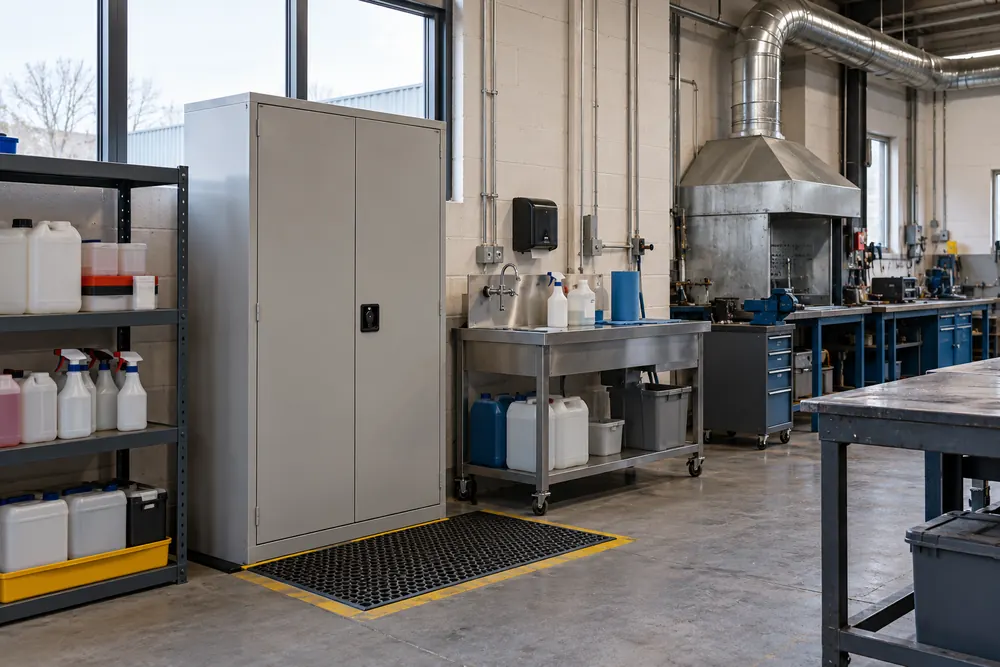
Assess The Task, Not Just The Container
A COSHH assessment examines how work can expose people to substances hazardous to health. The Control of Substances Hazardous to Health Regulations 2002 apply to relevant workplace exposure. An inventory of products is a useful starting point, but the assessment needs to explain what happens during the actual task.
A safety data sheet describes a supplied substance and provides useful hazard information. It does not describe your working methods, ventilation, exposure duration or cleaning arrangements. We connect that information to how the substance is handled and who may be affected by the work.
Process-generated substances matter too. Dust from sanding, mist from a process and fume from welding may need consideration even when there is no purchased container bearing a warning label. The work activity, the route of exposure and the effectiveness of control measures determine the assessment.
Where COSHH Support Is Needed
Manufacturing, engineering, cleaning, maintenance and education can all involve substances hazardous to health. Relevant activities may include decanting liquids, mixing products, cleaning equipment or removing residues. We ask about the full task, including set-up, routine use, waste handling and foreseeable spills.
COSHH can involve exposure through breathing, skin contact or ingestion. People nearby may also be affected, particularly where work areas share ventilation or cleaning staff enter after production. The assessment should consider who could be exposed and whether existing controls actually address that route.
Some substances fall under separate regulatory regimes. HSE identifies asbestos, lead and radioactive substances as outside COSHH because they have their own specific regulations. If these are relevant to your work, they need the appropriate separate assessment rather than being added to a general chemical form.
Our Assessment Process
We begin with a list of activities, substances and the people carrying out the work. Current safety data sheets, supplier information and any previous exposure results help us prepare. Tell us about product substitutions or process changes so the assessment reflects what is now being used.
Observation and discussion establish how exposure might occur, how often the activity takes place and which controls are already operating. We consider opportunities to avoid hazardous use or reduce exposure through different products, equipment or working methods. Personal protective equipment should not become a shortcut around more effective controls.
The resulting records describe the task, relevant hazards, exposure routes and required controls. Where further technical advice is needed, such as exposure measurement or a review of extraction performance, it should be identified clearly. Occupational health input and health surveillance may also be needed depending on the substance and the risk.
Records, Review And Cost
Workers need information and instruction they can understand and use. A concise task record should make the control requirements visible, including safe handling, storage and what to do if something goes wrong. Managers should be able to find the current assessment when a product or process changes.
Review is needed when the assessment may no longer be valid or there has been a significant change. A new product, altered ventilation or reports of symptoms should prompt attention. Reusing a generic sheet without checking the actual task can leave important exposures unexamined.
The quotation depends on the number and complexity of activities rather than just the number of products. Several products used in one controlled process may require a different approach from the same product used in different ways. Send an activity list and any available substance inventory, and highlight work involving dust, mist, vapour or fume.
Questions About Coshh Assessments
Is A Safety Data Sheet A COSHH Assessment?
A safety data sheet is not a COSHH assessment because it does not evaluate exposure during your particular work activity. It supplies hazard and handling information that helps inform the assessment. The completed record should connect that information to the task, the people exposed and the controls used at your premises.
Does COSHH Cover Dust And Fume?
COSHH covers relevant dust and fume generated by work as well as hazardous substances supplied in containers. Examples include wood dust and welding fume. The assessment needs to consider how exposure occurs and whether controls are effective, with specialist exposure or occupational health input identified where the risk makes that necessary.
For wider support, speak to our health and safety consultants Birmingham about the activities and premises involved.
Request A Scope Discussion